
quicklinks
Thank you! Your submission has been received!
Oops! Something went wrong while submitting the form.
Thank you! Your submission has been received!
Oops! Something went wrong while submitting the form.
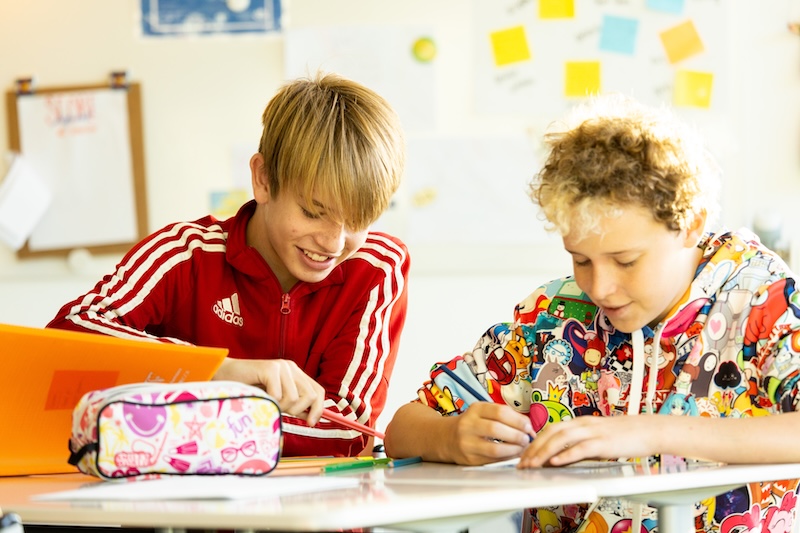
No parent can predict what the world will look like when their child graduates.
Many of today's students will work in careers that don't yet exist. They'll collaborate with people from different cultures, adapt to technologies we can't yet imagine and continue learning throughout their lives. If the future is impossible to predict, what should schools really prepare children for?
Academic knowledge will always matter. It opens doors to universities and future opportunities. But knowledge alone isn't enough. Children also need the confidence to embrace uncertainty, the curiosity to keep learning, the resilience to overcome setbacks and the empathy to work with people whose perspectives differ from their own.
These are often described as life skills, yet they aren't learned from a textbook. They grow through experiences, relationships and the quiet confidence children build every day.
No child becomes more resilient because resilience appears on a timetable.
They become resilient after rehearsing for weeks before stepping onto a stage. They become adaptable when a group project doesn't go as planned and they have to find another way forward. They develop confidence the first time they raise their hand to share an idea they aren't entirely sure about.
These moments often seem ordinary at the time. Years later, they're the ones students remember.
The most meaningful education isn't simply about transmitting knowledge. It's about creating the conditions in which children gradually discover what they are capable of.
When former students talk about school, they rarely begin with exam results.
They remember the teacher who encouraged them to keep going when something felt difficult. The coach who taught them that improvement matters more than perfection. The adult who noticed they weren't themselves one day and took the time to ask why.
Those relationships matter because children grow when they feel known.
As one ASP student explains:
"At ASP, the teachers really care for you. It's small enough that you can know everyone. It's a friendly, open environment with lots of positive reinforcement. If you're not doing well, teachers will ask what's wrong. You're not in competition with your friends; instead, your friends are pushing you to do your best."
This reflects something many families notice when they join ASP. Academic ambition and personal support are never seen as opposites. Students are challenged because their teachers believe in them, and supported every step of the way.
Children don't all discover their strengths in the same place. One may find them through science. Another through literature. Another through robotics, art or public speaking.
A broad curriculum gives students the freedom to explore different interests while encouraging them to think independently, ask thoughtful questions and make meaningful choices about their learning.
At ASP, whether students pursue the American High School Diploma, Advanced Placement (AP) courses or the International Baccalaureate (IB), the goal extends beyond academic achievement. Education is about helping every student become an engaged learner who is ready to continue growing long after graduation.
Discover our Curriculum and Diplomas and explore the many pathways available to students.
The qualities that shape adulthood don't suddenly appear in adolescence. They begin to take root much earlier, often in moments that seem almost ordinary at the time.
A child learns to resolve a disagreement with a classmate instead of walking away. They proudly explain an idea they've been working on, even if it isn't quite perfect. They choose to try something unfamiliar because they've learned that making mistakes is simply part of learning.
To an adult, these may look like small milestones. For a child, they are powerful moments of discovery. Little by little, they begin to think, "I can figure this out." Then, "I can try again." Eventually, "I can do this."
That quiet confidence cannot be taught through a lesson plan. It grows through encouragement, trust and the freedom to explore at a pace that feels right for each child. Long before students begin thinking about university or careers, they're already developing the mindset that will help them navigate both.
Learn more about our Early Childhood program and how young children begin developing these qualities from their very first years at school.
Ask alumni what they remember most about school and the answers are rarely limited to classrooms.
They remember performing in a musical, representing the school in sport, organizing a community project or debating global issues with classmates from around the world.
These experiences ask students to communicate, collaborate, lead, adapt and persevere because those qualities suddenly have a purpose.
ASP alumna Sarah Noble often reflects on how participating in Model United Nations shaped her future. What began as an extracurricular activity sparked a lasting interest in international relations that eventually led to a career in peacebuilding and humanitarian journalism.
Looking back, she wrote:
"My interest in humanitarian and peace issues was sparked by my experiences from ASP."
Her story is a reminder that schools rarely change lives through a single lesson. More often, they do so through the experiences they make possible.
Explore Student Life to discover how learning continues well beyond the classroom.
Children are far more willing to challenge themselves when they know they're supported. That is why community matters so much.
It is found in the friendships that span cultures, the teachers who know every student's name and the parents who welcome new families because they remember what it felt like to arrive themselves.
As one parent shared:
"The onboarding that families experience is phenomenal. If you're looking for a sense of community, you'll find it here. Everyone has been in the same position as new families and they want to share their knowledge and offer support."
Children are far more willing to step outside their comfort zone when they know they're surrounded by people who believe in them. That's what a strong school community makes possible.
Meet the ASP Community and discover what makes it such an important part of everyday life.
A great education should certainly prepare students for university, but its impact shouldn't end there.
Long after graduation, students may forget the details of a history lesson or a chemistry equation. What often stays with them are the people who believed in them, the experiences that broadened their horizons and the confidence they gained along the way.
Because children don't discover who they can become in a single lesson.
They discover it through the challenges they overcome, the relationships they build and the opportunities they're given to explore the world around them.
The future will continue to change. Helping children become curious enough to keep learning, confident enough to embrace uncertainty and compassionate enough to make a positive difference may be one of the greatest gifts an education can offer.
Life skills are qualities such as confidence, resilience, communication, empathy, adaptability and critical thinking. Alongside academic knowledge, they help children navigate change, build meaningful relationships and continue learning throughout their lives.
Schools don't usually teach life skills as a separate subject. Instead, children develop them through everyday experiences: collaborating with classmates, participating in extracurricular activities, taking on new challenges and learning from both successes and setbacks.
From the earliest years. Curiosity, confidence, communication and independence begin to grow through play, exploration, supportive relationships and opportunities to make age-appropriate choices.
An international school offers much more than an international curriculum. Every day, students learn alongside classmates from different cultures and perspectives while being supported by teachers who encourage them to explore, contribute and grow. Those experiences help them develop the confidence and adaptability they'll carry with them long after they leave school.