
quicklinks
Thank you! Your submission has been received!
Oops! Something went wrong while submitting the form.
Thank you! Your submission has been received!
Oops! Something went wrong while submitting the form.
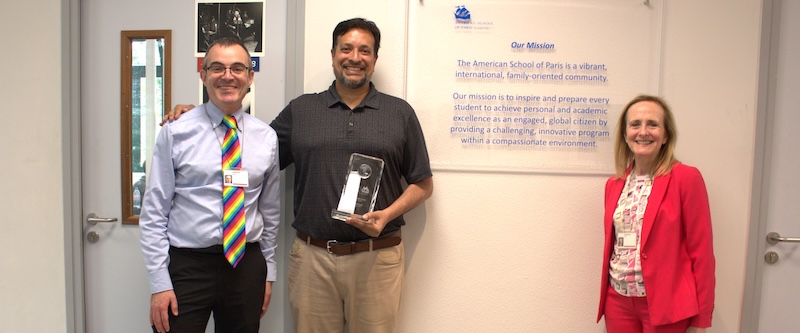
The ASP Alumni Council’s ASP Alumni Impact Award is presented annually to recognize distinguished alumni from the wide and diverse community of over 18,000 ASP alumni living around the globe. ASP alumni around the world are accomplished leaders and changemakers in so many domains! This award provides a great opportunity for our community to recognize and honor past students who have exemplified ASP's mission, brought pride to our school, and made a significant positive contribution in their field.
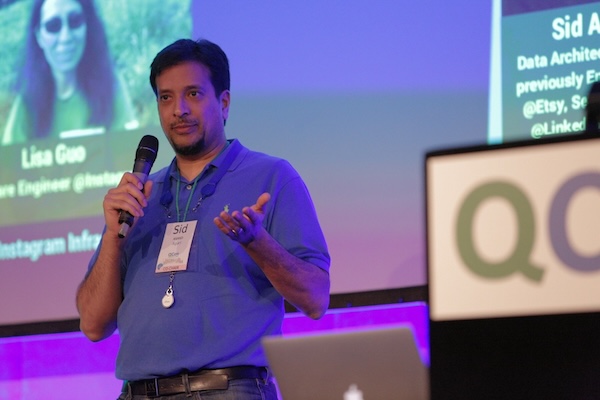
Congratulations to Siddharth (Sid) Anand ’93, the 2025–26 ASP Alumni Impact Award recipient. Sid holds a BS in materials science & engineering and an MEng in computer science from Cornell University. He is currently a technical fellow at Walmart. Before joining Walmart, he served as chief architect & head of engineering at Datazoom and as chief data engineer at PayPal. He has also held senior technical roles at Netflix, LinkedIn, eBay, Etsy, and other companies.
Sid also serves the broader tech community as co-chair and host of QCon, a leading global conference for software architecture and emerging technologies. As an architect of platforms that organizations and consumers use daily around the world, we recognize him in part for his expertise in scalability.
But it wasn't Sid's impressive technical mastery that swayed the ASP Alumni Council Award Committee—it was his generosity in sharing it as a dedicated mentor and guide. The committee noted that his leadership directly aligns with the school's mission to inspire personal and academic excellence. His trajectory from ASP student to global technology architect serves as a model of how curiosity, analytical thinking, and an international education can lead to meaningful global influence.
I entered ASP as a 9th grader, though I was no stranger to starting over—France was my fourth country, ASP my ninth school. Moving had always been part of my life, but leaving Northern Virginia was my hardest move yet. I had built real friendships there and was deep into skateboarding, which was still relatively new in France at the time. ASP made the transition easier. I was introduced to people from over 80 countries and cultures, and it was there that I discovered a lifelong interest in world cultures and languages—an interest recognized when I received the ECIS International Understanding Award just before graduation. ASP also took me beyond France, through math competitions, soccer tournaments, and ski trips to Bardonecchia, deepening that same sense of the world opening up. When I left for Cornell, I wanted to carry that multicultural exposure forward and chose to live at the International Living Center for my first two years
I cherish the lifelong friendships from my time at ASP.
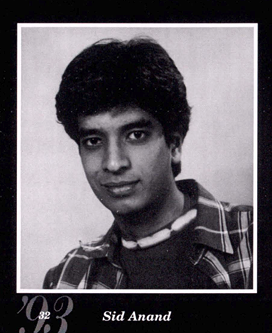
When I first joined ASP, I had no deep interest in STEM. I was always a good student, and while I did well in those subjects, my favorites were art and history—particularly Mr. Judis's history class. That began to change in chemistry with Mr. Jones, a strict and exacting teacher whose style spoke to me in a way I hadn't expected.
Around the same time, a close friend, Larry Mallick ’96, encouraged me to consider the International Baccalaureate. When I looked into the requirements, I realized my math level wasn't where it needed to be. I happened to meet Mr. Hubbard, the IB math teacher, one day and asked him about it. He was very positive and encouraged me to take some tutoring under him over the summer to bridge the gaps. It was thanks to him and his teaching style that, after a lifelong aversion to math, I started enjoying it.
Around 11th grade, I discovered Stephen Hawking's A Brief History of Time, which opened my eyes to gravitation and relativity. At that point, it was pretty clear to me that I enjoyed chemistry, math, and physics—and those became my three IB higher level subjects. I credit my interest in STEM to my fabulous teachers at ASP, to whom I will be forever indebted.
It's hard to point to one specifically. It perhaps started in college, where I got involved early in undergraduate research—working on novel liquid crystal thermosets and on semiconductor surface science, specifically reducing gate heating and resistance by improving surface characteristics. That experience set a pattern that has followed me throughout my career: at every company I've worked at, I've built something enduring, often in service of solving a difficult problem.
Very early in my career, at Motorola, I built semiconductor devices using novel materials and trained algorithms to optimize chip performance. At LinkedIn, I built search typeahead—one of the first things you do on LinkedIn is search for someone. At Netflix, I was part of a small team of three engineers that built the world's first cloud-based video streaming service, which helped Netflix transition from a DVD company into a streaming company. At PayPal, I built a system that delivers streaming data with no loss and low latency—if you've ever looked at your transaction history in PayPal, that data was delivered by my system. I'm proud of all of these achievements, though I should add that none of them were accomplished alone—each was the product of working alongside brilliant colleagues.
Having lived and worked in Silicon Valley for more than 25 years, I've come across two types of challenges. The first is the recognition that the world is always innovating around you and that you really can't stop learning—if you do, you will be left behind. The second has to do with balancing career and life. I like to say that "growth and comfort don't live together." There are periods in your career when professional growth has to take priority and during those periods, you will inevitably miss out on parts of your family's life, especially your children's. But if you only ever pursue growth, you will come to regret it. It's important to alternate periods of growth with periods of comfort, where you take on a role that gives you more time with your family and draw on your accumulated experience to mentor and guide others.
It's important to first recognize that no one can keep on top of everything happening in AI right now—it's a fool's errand to try. When starting out in a career in computer science, I'd suggest picking an area and committing to it for four to five years. If you love it, stay. Some areas, like mine—data infrastructure at scale—see constant innovation, but their scientific and engineering foundations remain pretty stable. My area is being leveraged by AI, but not replaced by it. Not everything will be disrupted by AI tomorrow; some areas are more vulnerable than others. You can choose a field like mine that has durable, long-term value.
My understanding of software architecture has deepened over more than 20 years in industry. That foundation won't be upended by AI—though we now face a new set of questions around how autonomous agents can cooperate with one another in a safe and predictable way. One of the enduring challenges in software architecture is delivering services that hundreds of millions of people depend on daily with predictable latency and high availability. With the agentic revolution, that challenge takes on new weight—we need to ensure that autonomous agents act in accordance with sound and fair practices, delivering insights to customers in a way that holds up under high traffic and strict latency expectations.
My dad gave me the best advice I've ever received: follow your passion, whatever it is. The most important things in life are curiosity and passion.
I believe students shouldn't go into a field solely for the money—they should commit to something they love. If you love it, you will find a way to make money. For me, though, this advice was harder to follow than it sounds—I had varied interests and boundless curiosity, which made narrowing my focus a challenge in itself.
When I was in my twenties, I formulated my own rubric for deciding where to focus my career. More than twenty years later, I learned I wasn't the first to arrive at it. The Japanese call it ikigai—'reason for being'—and it rests on four pillars:
When starting out in your career, consider these four pillars and you won’t go wrong.